Nanofiltration Solutions for APIs in Pharmaceutical Manufacturing

Active Pharmaceutical Ingredients (APIs) in pharmaceutical manufacturing are the foundation of modern medicine. Together with excipients, they constitute the two essential components of any pharmaceutical product, with APIs serving as the biologically active substances responsible for delivering the intended therapeutic effect. As a result, the quality, purity, and consistency of pharmaceutical APIs have a direct impact on a drug's safety, efficacy, and overall performance.
Given their critical role, the development and manufacturing of APIs involve highly controlled and rigorous procedures. The API production process encompasses multiple stages, from chemical synthesis to separation, purification, and final formulation, with strict quality standards applied throughout each step. Regulatory requirements and Good Manufacturing Practices (GMP) demand precise control over impurities, residual solvents, and product consistency to ensure that every batch meets the required specifications. API purification processes are critical, as they are responsible for removing impurities, by-products, catalysts, residual reactants, and other solvents that may arise during production, thereby ensuring the exceptionally high purity levels required for pharmaceutical applications. Because even trace contaminants can affect product quality, stability, or patient safety, pharmaceutical manufacturing relies on highly efficient and precise purification technologies to achieve the necessary standards.
Keep reading to learn more about Active pharmaceutical Ingredients (APIs) and how next-generation separation technologies are reshaping the industry.
APIs in Pharmaceutical Manufacturing
APIs in pharmaceutical manufacturing are the biologically active compounds responsible for delivering the intended therapeutic effect of a medicine. The API production process generally involves several key steps, including synthesis or production, separation, purification, isolation, and drying, followed by extensive analytical testing and quality assurance procedures. The precise manufacturing pathway depends on the nature and complexity of the molecule being produced, as different classes of APIs require distinct production technologies and purification strategies.
Several approaches are commonly used in API manufacturing, including chemical synthesis for conventional small-molecule drugs, recombinant production using living cells or microorganisms for biologics, and extraction or isolation from natural sources such as plants, microorganisms, or animal-derived materials. Once manufactured and purified to the required quality specifications, APIs are combined with excipients to create final dosage forms including tablets, capsules, injectables, suspensions, and other pharmaceutical products. Before release to the market, every batch undergoes rigorous testing to verify identity, purity, potency, stability, and compliance with regulatory standards. Some of the major categories of pharmaceutical APIs include:
Peptide APIs: Peptide therapeutics consist of short chains of amino acids and are increasingly used in the treatment of conditions such as diabetes, cancer, metabolic disorders, and cardiovascular diseases, amongst others.
Small Molecule APIs: Small molecules remain the backbone of the pharmaceutical industry and account for the majority of approved medicines worldwide.
Oligonucleotide APIs: Oligonucleotide therapeutics are short nucleic acid sequences designed to modulate gene expression or protein production. Their ability to target diseases at the genetic level has led to growing applications in neuromuscular disorders, rare diseases, and ophthalmology, driving strong global demand for oligonucleotide APIs.
Biologic APIs: Biologic APIs include complex molecules such as monoclonal antibodies, recombinant proteins, vaccines, and cell-based therapies. Biologic APIs are produced using living systems rather than conventional chemical synthesis, and they represent one of the fastest-growing segments of the pharmaceutical industry.
Generic APIs: Generic APIs contain the same active ingredient as their branded counterparts and are required to demonstrate equivalent quality, safety, and efficacy. While manufacturing methods, formulations, and excipients may differ between generic and originator products, the active pharmaceutical ingredient itself must meet the same regulatory quality standards.
Types of Active Pharmaceutical Ingredients (APIs)
To provide greater context to the API pharmaceutical definition, let’s take a closer look at its classifications.
Natural APIs
Derived from plants, microorganisms, and other natural sources, natural APIs are typically isolated through extraction processes. Due to their biological origin, these APIs are often chemically complex and highly therapeutic.
Synthetic APIs
Manufactured chemically in laboratories, synthetic APIs are designed with high precision and consistency. They are generally precise in chemical composition and often more cost-effective compared to natural APIs.
Within the above categories, APIs can be further classified into various types. For instance:
| Type of API | Description | Therapeutic Applications | Classification |
|---|---|---|---|
| Peptide APIs | Chains of amino acids that can mimic natural peptides in the body. | Diabetes, cancer, cardiovascular diseases; generally considered safe due to natural metabolism. | Biologic or synthetic. |
| Small Molecule APIs | Low molecular weight compounds; the backbone of pharmaceutical therapies. | Oral medications for infections, hypertension, pain management, and many chronic conditions. | Usually synthetic. |
| Oligonucleotide APIs | Short DNA or RNA molecules with therapeutic potential. | Neuromuscular diseases, ophthalmologic disorders, and emerging treatments for rare diseases. | Usually synthetic. |
And many more!
Understanding the API Production Process
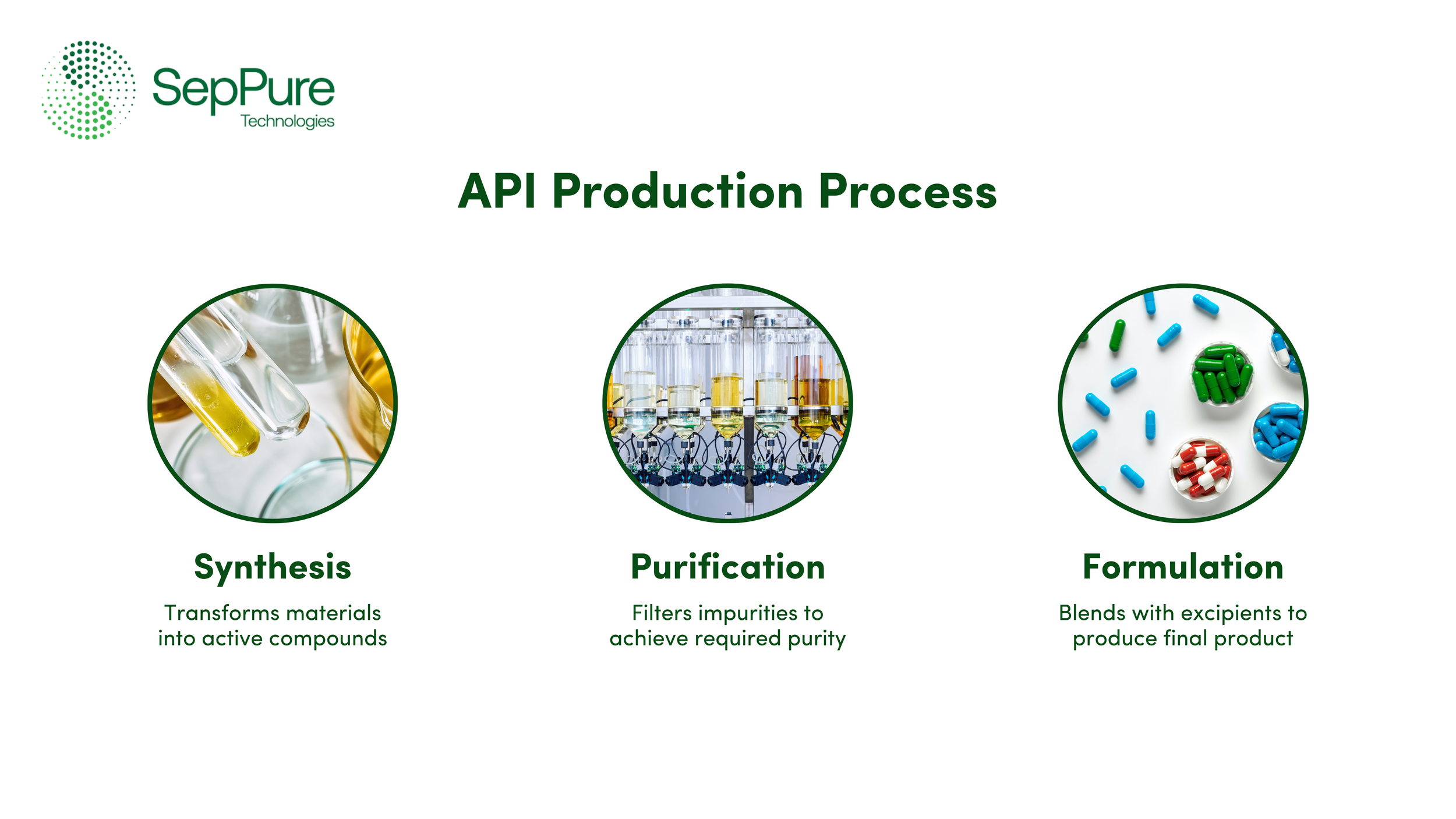
The API production process involves multiple stages including synthesis, purification, and formulation.
Synthesis
In the synthesis stage of pharmaceutical API manufacturing, the active pharmaceutical ingredient is produced through carefully controlled chemical reactions. This process involves combining raw materials, utilizing catalysts where necessary, and optimizing reaction parameters such as to achieve the desired product yield and purity. Depending on the the compound, synthesis may be carried out in a variety of reaction media, often involving organic solvents.
Purification
Following synthesis, the product typically contains residual starting materials, reaction by-products, impurities, and trace solvents that must be removed before further processing. The API purification process isolates the target molecule using techniques such as crystallization, distillation, advanced chromatography, and more, to achieve the required purity levels and ensure compliance with international pharmacopeial standards.
Formulation
Finally, the purified active pharmaceutical ingredient (API) is combined with excipients and formulated into its final dosage form, including tablets, capsules, injectables, and more. This stage ensures the product meets the required standards for safety, efficacy, stability, and patient use.
API Market Outlook & Projection
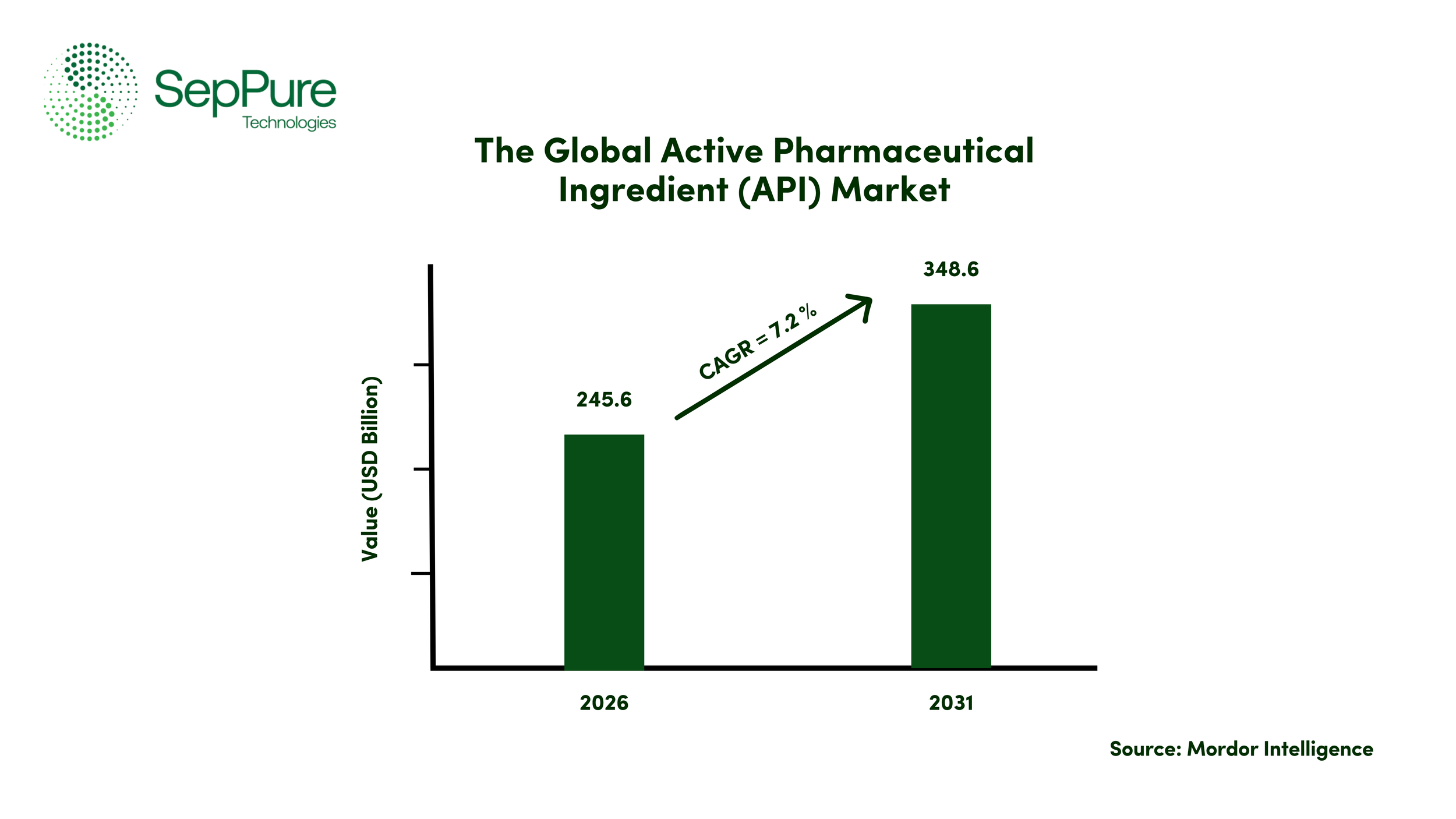
According to Mordor Intelligence, the global active pharmaceutical ingredients (API) market was valued at USD 245.67 billion in 2026 and is expected to reach USD 348.61 billion by 2031, registering a CAGR of 7.25% during the forecast period. This sustained growth reflects not only the expanding scale of the pharmaceutical industry, but also the increasingly critical role of APIs in meeting the growing demand for advanced therapies and innovative drug formulations. Nevertheless, as the market continues to expand, the pharmaceutical industry must overcome significant challenges to ensure that API manufacturing processes become more sustainable, safer, and economically efficient.
Common Challenges in API Purification
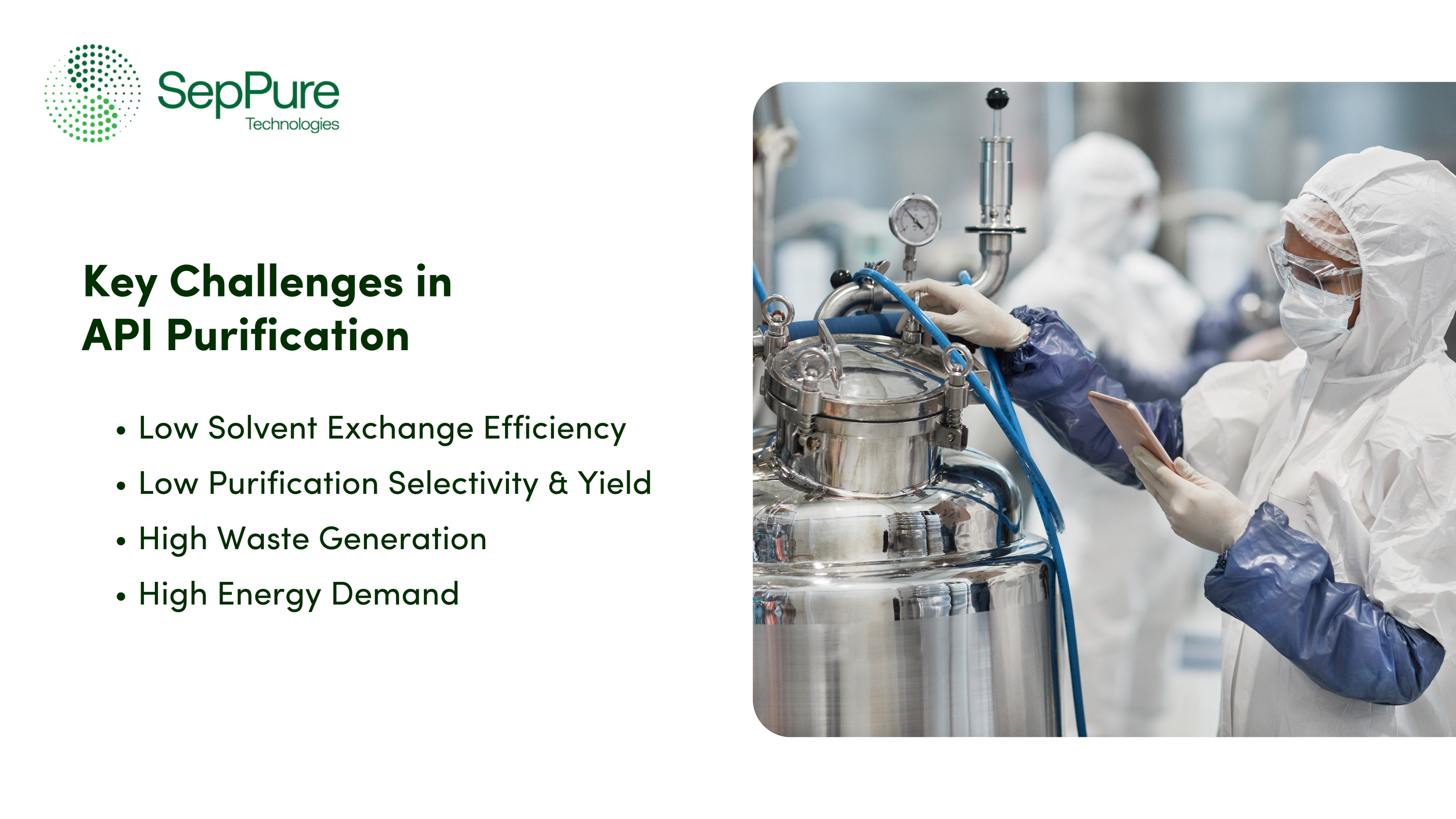
Purification remains one of the most critical and resource-intensive stages in the manufacturing of pharmaceutical APIs, often accounting for a significant proportion of production costs, energy consumption, and solvent usage. As demand for pharmaceutical APIs continues to grow, overcoming the limitations of conventional purification technologies has become increasingly important to improve manufacturing efficiency, product quality, and process sustainability. Some of the key challenges include:
Limited Solvent Exchange Efficiency: Transitioning between reaction stages often requires solvent replacement. Conventional thermal distillation methods can expose heat-sensitive pharmaceutical APIs to elevated temperatures, increasing the risk of thermal degradation and reduced product quality.
Purification Selectivity and Yield: Removing impurities with molecular properties similar to the target pharmaceutical APIs remains challenging, often resulting in a trade-off between achieving high purity and maximizing product recovery.
High Solvent Consumption and Waste Generation: Pharmaceutical API purification relies heavily on organic solvents such as methanol and hexane. The treatment, disposal, or incineration of these hazardous solvents contribute substantially to operating costs, environmental impact, and carbon emissions.
Excessive Energy Demand: Conventional separation technologies depend on energy-intensive heating and cooling cycles, resulting in high utility consumption, increased production costs, and a larger environmental footprint.
Revolutionizing API Purification with SepPure’s Advanced OSN Membranes

Traditional API production processes bring about significant challenges, including high energy consumption, extensive solvent use, and potential degradation of sensitive molecules during purification. Advanced technologies, such as SepPure’s GreenMem® Organic Solvent Nanofiltration (OSN) membranes provide a more efficient and sustainable alternative. Our membranes can be seamlessly integrated at multiple stages of the API production process. These pressure-driven membranes operate without extensive heating, achieving the same level of purity while consuming only 10% of the energy required by conventional distillation.
Controlled and Stable Solvent Exchange
Our GreenMem® Organic Solvent Nanofiltration (OSN) membranes provide a milder and more controlled separation process. By eliminating exposure to high temperatures, APIs maintain stability and retain their therapeutic properties throughout the process.
Selective Purification and Enhanced Yield
OSN membranes enable precise molecular separation based on the chemicals' size and charge. By filtering the solvent-API mixture through OSN membranes at the initial stage of downstream purification, contaminants can be efficiently removed. This ensures a higher API concentration before other purification steps, ultimately leading to improved yield and enhanced purity.
Energy-Efficient Separation
Pressure-driven separation with OSN membranes offers a substantial reduction in energy requirements compared to conventional distillation. Internal studies at SepPure Technologies demonstrate that hybrid OSN systems achieve high solvent purity while using only a fraction of the energy used by distillation.
Reduced Solvent Waste
Our GreenMem® OSN membranes enable energy-efficient recovery of solvents and catalysts, minimizing chemical waste. This cuts waste and operational costs, contributing to a circular economy in the pharmaceutical industry.
By integrating GreenMem® Organic Solvent Nanofiltration (OSN) membranes into the pharmaceutical manufacturing processes, businesses can enhance product quality, improve yield, and reduce environmental impact. This innovative technology not only ensures compliance with industry standards, but also lowers operational costs, and supports sustainable practices.
Frequently Asked Questions (FAQs) About APIs in Pharmaceutical Industry
-
An API or active pharmaceutical ingredient, is the biologically active component in a drug responsible for its therapeutic effect. For instance, in an aspirin tablet, acetylsalicylic acid is the API that relieves pain, while the rest of the tablet consists of inactive binders and fillers. In the pharmaceutical industry, APIs are central to a medication’s efficacy, safety, and consistency. Thus, their precise production and purification are essential.
-
API production generally involves three core stages: synthesis, purification, and formulation. Synthesis produces the active compound, purification removes impurities while preserving stability, and formulation incorporates the API into the final pharmaceutical dosage form, such as tablets, capsules, or injections.
-
API purification presents a number of challenges for the pharmaceutical industry, including solvent handling, separation selectivity, yield optimization, energy consumption, waste management, and more, all of which can affect the purity, yield, and cost-effectiveness of APIs.
-
Organic Solvent Nanofiltration (OSN) membranes offer a pressure-driven, energy-efficient approach to chemical separation processes. OSN membranes enable precise filtration, reduce energy use, minimize solvent waste, and preserve API stability, providing a sustainable alternative to traditional distillation-based methods.
-
SepPure’s GreenMem® is the world’s best solvent-resistant membrane and the only Organic Solvent Nanofiltration (OSN) technology available today that delivers high performance in both polar and polar-aprotic solvents, making it an exceptionally versatile solution for the pharmaceutical industry. By utilizing GreenMem®️, the pharmaceutical industry can significantly optimize manufacturing processes, reduce waste, and energy consumption.