A Comprehensive Guide to Nanofiltration Membranes
Chemical separation processes have long been the bedrock of numerous industrial applications, ranging from pharmaceutical manufacturing to petrochemical refinement. However, industries still use millions of tons of organic solvents to manufacture drugs, oils, and chemical products, most of which subsequently go through energy-intensive and thermal separation methods, such as distillation, evaporation, and drying processes. While undeniably effective, these conventional techniques often entail significant energy consumption, substantial greenhouse gas (GHG) emissions, and intricate infrastructure. They can also cause fire hazards, degrade heat-sensitive products at particular/elevated temperatures, and in particular instances, yield suboptimal separation. In response, nanofiltration membranes have emerged as an innovative and viable alternative. From their myriad benefits to their applications in various industries, in this article, we explore nanofiltration membranes and examine how they prove to be an efficient yet sustainable separation technique.
Nanofiltration Membranes: Overview & Applications
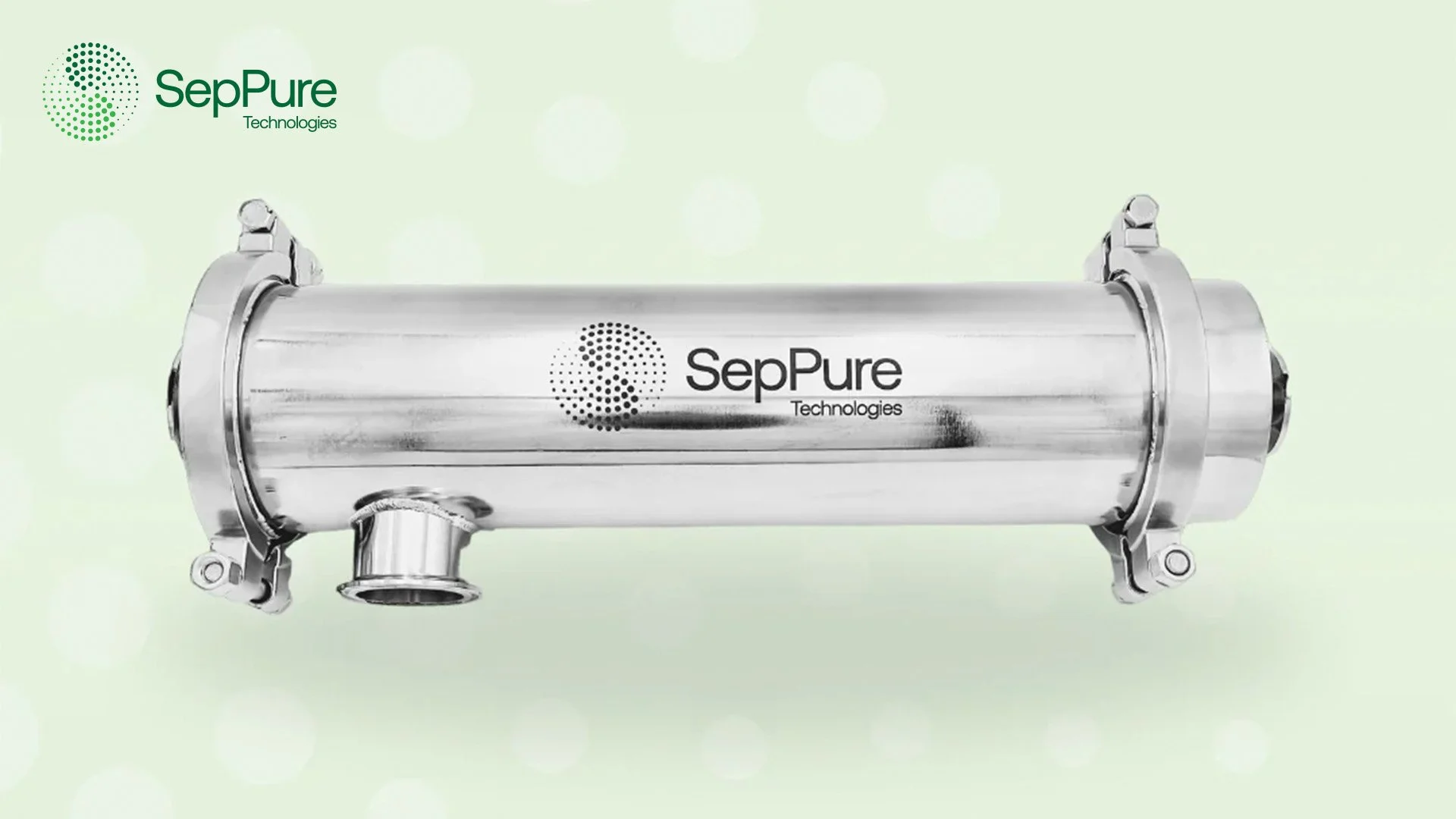
Nanofiltration membranes are an advanced filtration technology designed to separate chemicals at the molecular level while minimizing energy use, solvent loss, and fire hazards. In this process, membranes retain the larger molecules and allow smaller ones to pass through. By harnessing this molecular-level filtration, nanofiltration membranes excel at removing impurities from solutions with unmatched precision and efficiency. Their exceptional selectivity, energy efficiency, and versatility make them suitable for a wide range of industrial applications.
Key Applications of OSN Membranes
Organic Solvent Nanofiltration (OSN), also known as solvent-resistant nanofiltration, is a specific type of pressure-driven nanofiltration membrane technology. Some of its applications include:
Solvent–solute separation: Recovery of desired solutes or purified solvents.
Solute purification: Separation of compounds in a solvent by molecular size and other chemical properties.
Solvent exchange: Replacing one solvent in a solution with another without requiring phase change.
These applications are critical across a wide range of industries including edible oil, pharmaceuticals, petrochemicals, semiconductors, specialty chemicals, performance materials, and waste management, amongst others.
Environmental Impact and Efficiency
Traditional separation methods like distillation and evaporation are energy-intensive and unsustainable, contributing significantly to industrial waste, energy consumption, and up to 10% of global CO₂ emissions. By effectively separating these resources, OSN membranes enable their reuse with minimal energy input, significantly reducing waste and emissions.
Recent Advances and Future Prospects
In recent years, the use of innovative fabrication methods, novel materials, and unique structural properties have enabled significant advances in the development of nanofiltration membranes. This has enabled the design and manufacturing of higher-performance membranes capable of selective separation. Recent studies and work on nanofiltration membranes reviewing recent advances and future prospects highlight how ongoing research and development contribute to their further efficiency and performance, enabling their broader industrial use.
Advantages of Organic Solvent Nanofiltration (OSN) Membranes
Many industries still rely on traditional heat-based separation methods like distillation, evaporation, and drying. However, integrating nanofiltration membranes into industrial processes provides several advantages over conventional techniques.
Efficient and Selective Separation
Organic Solvent Nanofiltration (OSN) membranes deliver exceptional selectivity and efficiency. Their precise molecular separation, enabled by nanofiltration membrane pore size, ensures superior product quality and supports industries in shifting toward more sustainable processes while meeting strict quality standards.
Energy and Cost Efficiency
Organic Solvent Nanofiltration membranes primarily operate through pressure-driven mechanisms rather than heat-based processes, which significantly reduce energy consumption. They also enable efficient solvent recovery and reuse, lowering the demand for fresh solvents and reducing the overall operating costs. While nanofiltration membrane cost is part of the initial setup considerations, the costs are then offset by savings from improved energy efficiency and reduced solvent use, leading to a quicker return on investments.
Environmental Sustainability
The lower energy requirements of OSN membranes significantly reduce greenhouse gas emissions compared to conventional heat-based methods. With nanofiltration membranes, industries can substantially lower their carbon footprint and work towards achieving sustainability goals.
Process Flexibility and Scalability
Organic Solvent Nanofiltration membranes can be tailored to specific separation requirements, handling various feedstocks and adjusting to changing production demands. Their modular-scale design allows seamless integration into existing processes, enabling upgrades and expansions without major modifications.
Minimal Waste Generation
Unlike conventional methods that consume large amounts of solvents and energy, nanofiltration membranes operate efficiently with little to no chemical use. This reduces operational costs and waste generation while maintaining high-quality outputs. Overall, nanofiltration membranes represent a sustainable and cost-effective alternative to traditional industrial separation processes. By selecting the right membrane technology, industries can achieve high product purity and yield, all while minimizing energy consumption and environmental impact.
Why SepPure Technologies?
Nanofiltration membranes have emerged as a transformative solution for industrial chemical separation, offering high efficiency, selectivity, and sustainability. They enable a wide range of applications, providing a strong alternative to traditional thermal separation methods. For companies looking to integrate high-performance OSN systems into their operations, working with experienced nanofiltration membrane manufacturers is critical to ensure consistent quality and precise performance. Partnering with established nanofiltration membrane suppliers like SepPure Technologies also provides access to reliable supply and membranes tailored for various demanding industrial applications.
SepPure Technologies is the world’s only company manufacturing nanofiltration membranes that deliver exceptional performance in both polar and polar-aprotic solvents. Its technology outperforms the market across key metrics, including flux, pricing, temperature tolerance, versatility across chemical environments, packing density, and overall technological maturity.
By working with SepPure Technologies, industries benefit from:
Expert guidance in selecting the most suitable membranes for their particular processes
High-quality nanofiltration membrane materials, enhancing performance and durability
Reliable delivery and support through an established supplier network
SepPure offers a technology that combines high performance, versatility, and efficiency, helping industries enhance product quality, increase yield, and improve the overall process sustainability and economics.
Embark on your journey towards sustainable innovation with GreenMem® today!
Frequently Asked Questions (FAQs) About OSN Membranes
-
Nanofiltration membrane process refers to a pressure-driven separation technique that uses nanofiltration membranes to separate chemicals at the molecular level. These membranes allow molecules of specific properties to pass through while retaining larger or undesired molecules. This selective separation offers an environmentally friendly alternative for industries that traditionally rely on energy-intensive methods for chemical separation, making the process more sustainable.
-
While both reverse osmosis (RO) and nanofiltration (NF) membranes are pressure-driven separation technologies, they differ in selectivity and application, with NF offering more flexible separation based on multiple chemical properties rather than near-total rejection. Organic Solvent Nanofiltration (OSN) membranes extend this approach by operating reliably in organic solvents and other harsh chemical environments, providing greater robustness and enabling more efficient and sustainable chemical separations.
-
Yes! Nanofiltration membranes are highly versatile, finding applications across many sectors, from pharmaceutical and edible oil to petrochemical and specialty chemicals. Their ability to separate chemicals at the molecular level makes them an ideal solution for a wide range of industrial processes.
-
Yes. SepPure Technologies is a nanofiltration membrane manufacturer. The company designs and produces its own proprietary chemical-resistant hollow fiber membranes for Organic Solvent Nanofiltration (OSN) applications.
-
The price of nanofiltration membranes varies widely depending on the material, application, and scale. Contact SepPure Technologies experts to get a tailored recommendation and accurate pricing for your particular application.