
Integrating OSN Technology into Hydrocarbon Separations

Hydrocarbons are organic compounds that are solely composed of hydrogen and carbon atoms. They are widely used across industries including petrochemical, chemical, plastics, rubber, and more, as essential raw materials, and they are vital to modern life and its quality. About 85-90% of the global hydrocarbon production is utilized for energy applications, including transportation fuels, electrical power generation, and heating. Hydrocarbons also constitute essential feedstocks for the chemical, pharmaceutical, petrochemical, plastics, and rubber industries, amongst others. Moreover, the majority of industrially significant synthetic chemicals are also derived from petroleum-based sources, highlighting the crucial role of hydrocarbons in modern industrial processes and energy systems.
Hydrocarbons occur as highly complex mixtures that require extensive chemical processing and separation to produce valuable products. Conventional separation methods, such as distillation and extraction, remain the industry standard; however, they are often hindered by high energy consumption, harsh operating conditions, and limited selectivity when separating hydrocarbons with similar physicochemical properties or molecular structures. According to the Industrial Energy-Related Technologies and Systems (IETS), separation processes account for approximately 40–70% of the total energy consumption in the chemical and refining industries.
These limitations have accelerated the search for alternative separation technologies capable of improving energy efficiency, reducing greenhouse gas emissions, and enabling more sustainable hydrocarbon processing. Among these emerging technologies, membrane separation systems have gained significant attention due to their operational simplicity, mild processing conditions, and comparatively low energy requirements.
This article explores the importance of hydrocarbon separations, the limitations of conventional separation technologies, and the potential of membrane-based approaches to transform industrial separation processes.
Understanding Hydrocarbon Separation

The primary method used in hydrocarbon separation processes is fractional distillation, which separates hydrocarbons based on differences in their boiling points. During this process, crude oil is heated in a distillation column, causing the various components to vaporise. The vapours then rise through a fractionating column, where temperatures gradually decrease at higher levels. As the vapours cool, they condense at different heights according to their boiling points. Lighter fractions, which have lower boiling points, travel higher up the column before condensing, while heavier components with higher boiling points condense lower down.
This separation of hydrocarbons produces various crucial products, each with distinct properties and applications. The following table provides an overview of several key fractions, their characteristics, and some of their main uses:
| Fraction | Properties |
Main Uses |
|---|---|---|
| Petroleum Gas | The lightest fraction obtained during hydrocarbon separation processes. Its main components include propane and butane, which have low boiling points and vaporize easily. It is highly flammable and ignites quickly. | Household cooking, heating systems, and LPG fuel applications. |
| Gasoline | A mixture of light hydrocarbons with high volatility and easy ignition. It is ideal fuel for internal combustion engines. | Fuel for cars, motorcycles, and small machinery. It is also used as an industrial solvent. |
| Kerosene | A medium-boiling hydrocarbon fraction with lower volatility than gasoline. It has lower volatility but still burns steadily and produces less soot compared to lighter fuels. | Jet fuel for aviation, lighting, oil stoves, and industrial heating systems. |
| Diesel | A heavier hydrocarbon fraction with lower volatility but stable energy release during combustion. It is efficient in engines requiring torque. | Fuel for trucks, ships, buses, and construction machinery. |
| Lubricating Oil | High-viscosity fraction with strong lubrication properties. It reduces friction, minimizes wear, cools components, and protects machinery. | Engine oils, machinery lubrication, and industrial equipment maintenance. |
| Bitumen | The heaviest residue remaining after the separation of hydrocarbons. It is nearly non-volatile, highly adhesive, and water-resistant. | Road construction, waterproofing, and roofing materials. |
Although fractional distillation is the primary step, modern refineries also use additional processes to improve yield and product quality. Some of these processes include:
Cracking: The most widely used conversion method, cracking uses heat, pressure, catalysts, and sometimes hydrogen to crack heavy hydrocarbon molecules into lighter ones.
Alkylation: Sometimes referred to as “cracking in reverse”, this process uses some of the gaseous byproducts of cracking to make gasoline.
Reforming: Uses heat, moderate pressure, and catalysts to turn naphtha, a light relatively low-value fraction, into high-octane gasoline components.
In general, hydrocarbon separation processes form the foundation of the petrochemical and refining industries. Crude oil in its raw form has almost no modern industrial use, and refining transforms it into a wide range of valuable products with specific boiling ranges, molecular structures, and performance characteristics. Beyond product generation, refining and separation processes also play a critical role in optimizing resource utilization and economic value. Rather than using crude oil as a single low-value material, refineries maximize the value of each hydrocarbon fraction by converting it into products tailored for different industrial and commercial applications. As a result, hydrocarbon refining remains one of the most important and economically significant industrial operations in the global energy and manufacturing sectors.
Limitations of Traditional Hydrocarbon Separation Processes
The most widely used method for separating hydrocarbons from crude oil is fractional distillation. This process involves heating crude oil in a distillation column and separating components based on their boiling points. Although fractional distillation forms the foundation of modern petroleum refining, traditional hydrocarbon separation processes face several major limitations in terms of energy consumption, environmental impact, efficiency, and infrastructure requirements. As global industries move toward more sustainable and lower-carbon technologies, these challenges have become increasingly difficult to bypass.
Extremely Energy-Intensive
Conventional hydrocarbon separation processes are inherently energy-intensive due to their reliance on repeated heating and cooling cycles. Distillation requires substantial thermal energy to vaporize hydrocarbon mixtures and subsequently condense them into purified fractions. Globally, crude distillation units alone account for approximately 15-20% of total refinery energy consumption. These processes also heavily depend on fossil fuel combustion to generate process heat, contributing significantly to greenhouse gas emissions. Conventional thermal separation operations have been reported to emit approximately 1.11 × 10⁻² kg CO₂-equivalent per functional unit.
High Carbon Emissions
Conventional hydrocarbon separation technologies are highly energy-intensive, as they rely predominantly on thermal energy for operation. Thus, these processes are inherently associated with substantial greenhouse gas emissions. The heat required for fractional distillation and other separation processes is typically generated through the combustion of fossil fuels, leading to significant carbon dioxide (CO₂) emissions. Petroleum refineries therefore represent a major source of industrial emissions, contributing approximately 11% of the global CO₂ emissions associated with fuel combustion.
A significant proportion of these emissions originates from distillation columns, furnaces, boilers, and associated heating systems that facilitate the separation and purification of crude oil fractions. Although measures such as process optimisation, heat recovery, and energy integration can improve operational efficiency and reduce energy consumption, the emissions associated with conventional distillation remain fundamentally difficult to eliminate due to the strong dependence of these processes on continuous thermal input. Therefore, the environmental impact of traditional hydrocarbon separation processes has become a critical concern within the broader context of global decarbonisation initiatives and the increasingly strict environmental regulations.
Limited Efficiency for Similar Hydrocarbon Mixtures
Fractional distillation is most effective when separating compounds with substantially different boiling points. However, many refinery and petrochemical streams contain hydrocarbons with highly similar volatilities and overlapping boiling ranges, making efficient separation considerably more difficult. Among the most challenging examples are olefin/paraffin separations, such as ethylene/ethane and propylene/propane mixtures, which are widely regarded as some of the most energy-intensive and technically demanding separation processes in the petrochemical industry, requiring multiple distillation columns, extensive recycle streams, and, in many cases, cryogenic operating conditions. These additional processing requirements significantly increase operational complexity, energy consumption, and capital expenditure.
Moreover, repeated exposure to high temperatures can adversely affect overall process efficiency and may lead to product degradation, reduced separation selectivity, and material losses. Consequently, the limitations of conventional distillation in separating closely related hydrocarbons have become a major driving force behind the development of more energy-efficient, cost-effective, and highly selective separation technologies.
Large-Scale and Capital-Intensive Infrastructure
Traditional hydrocarbon separation systems require extensive industrial infrastructure and substantial capital investment. Modern refineries depend on large networks of distillation columns, heat exchangers, compressors, furnaces, reactors, and pipelines operating continuously under demanding thermal and chemical conditions. The scale and complexity of these facilities result in high construction, maintenance, and operating costs. Furthermore, the physical footprint of conventional separation equipment limits operational flexibility and makes refinery expansion, retrofitting, or process modernization both costly and time-intensive. Long-term operation under elevated temperatures and corrosive conditions can also accelerate equipment degradation, increasing maintenance requirements and reducing overall operational efficiency.
The Shift Toward More Sustainable Separations
The growing limitations associated with conventional hydrocarbon separation processes have accelerated the search for alternative technologies capable of improving both energy efficiency and environmental sustainability. Traditional separation methods, particularly fractional distillation, remain essential within the refining and petrochemical industries; however, their heavy dependence on thermal energy results in high operational costs, significant greenhouse gas emissions, and substantial infrastructure requirements. These challenges become even more pronounced when separating hydrocarbons with similar boiling points, where multiple distillation stages, recycle streams, and cryogenic operating conditions are often required to achieve the desired product purity. As global energy demand continues to increase alongside stricter environmental regulations and decarbonisation targets, the development of more sustainable separation technologies has become a major research priority. Among the most promising alternatives are membrane-based separation technologies, which offer the potential to overcome many of the technical and environmental limitations of conventional thermal processes.
Lower Energy Consumption
Conventional distillation processes require large amounts of thermal energy to heat hydrocarbon mixtures and maintain vapor-liquid equilibrium within distillation columns. Membrane separation systems, by contrast, often operate at lower temperatures and do not necessarily require phase changes, significantly reducing overall energy demand. This makes membrane technologies particularly attractive for energy-intensive separations such as olefin/paraffin mixtures.
Reduced Environmental Impact
Because membrane processes consume less energy, they are also associated with lower greenhouse gas emissions compared to conventional thermal separation technologies. Reduced reliance on fossil-fuel-driven heating systems can contribute to lower refinery carbon footprints and support broader industrial decarbonisation efforts. As environmental regulations become increasingly strict, membrane-based systems offer a pathway toward more sustainable hydrocarbon processing.
High Selectivity and Separation Efficiency
Modern membrane materials can be engineered to selectively separate molecules based on properties such as molecular size, diffusivity, or solubility. This selective transport mechanism enables efficient separation of hydrocarbons that are otherwise difficult to separate using conventional distillation methods. In some cases, membrane systems may achieve separations that would normally require multiple distillation stages.
Modular and Compact Design
Membrane systems are generally more compact than conventional distillation units, which often require large columns, extensive piping networks, and associated heat exchange equipment. The modular nature of membrane units allows for easier installation, scalability, and integration into existing refinery infrastructure. This can reduce both construction costs and space requirements within industrial facilities.
Continuous Operation and Process Flexibility
Membrane-based systems are well suited for continuous industrial operation and can often respond more rapidly to changes in process conditions compared to conventional thermal systems. Their operational flexibility makes them attractive for integration into modern process operation strategies aimed at improving overall refinery efficiency.
Potential Reduction in Capital and Operating Costs
Although membrane technologies may involve high initial material development costs, their lower energy requirements and simplified process configurations can reduce long-term operating expenses. In some applications, membrane systems may also decrease the need for multiple separation units, recycle streams, and auxiliary heating equipment, resulting in lower overall capital investment.
A Sustainable Future with SepPure
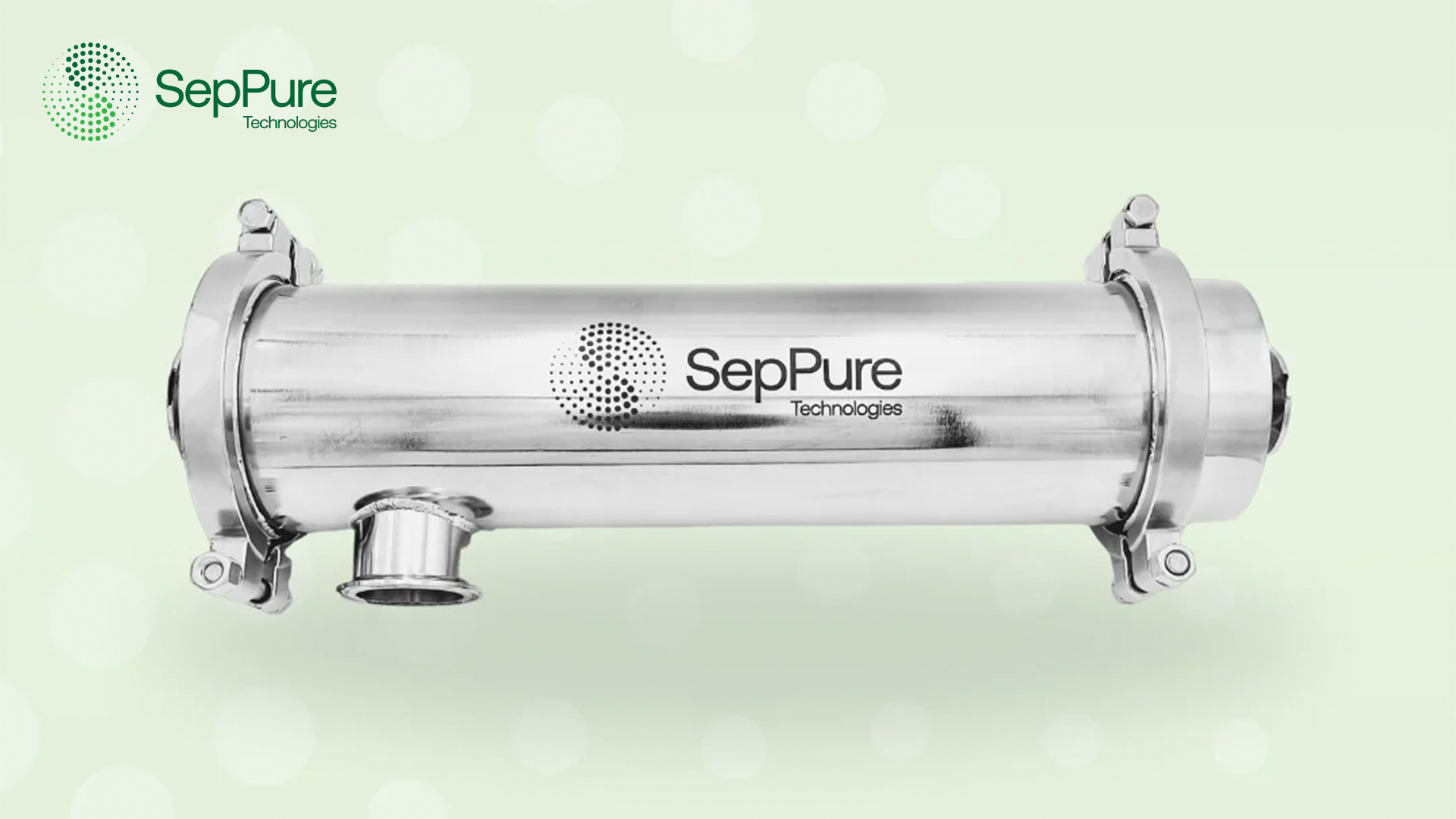
SepPure’s Organic Solvent Nanofiltration (OSN) membrane technology represents an advanced and energy-efficient approach to hydrocarbon separation processes by operating at the molecular scale. Unlike conventional distillation processes, which rely primarily on differences in boiling points and require substantial thermal energy input, SepPure’s membranes enable selective separation of chemicals based on molecular size, charge, and other chemical properties. Featuring pore sizes smaller than one nanometre, these membranes enable highly precise separation of complex hydrocarbon mixtures that are often difficult and energy-intensive to process using traditional thermal methods.
A major advantage of SepPure’s technology is its ability to integrate directly into existing refinery infrastructure through hybrid installations that operate alongside the conventional distillation units. In this configuration, membrane system performs the initial bulk separation step, removing up to 90% of the solvent without the need for heat-driven phase changes. The remaining fraction is then processed through conventional distillation, significantly reducing overall heating requirements, energy consumption, and operational intensity.
By reducing the reliance on fossil fuel-based thermal energy, membrane technology offers a more sustainable approach to hydrocarbon separation. As industries continue to prioritise sustainability and energy efficiency, membrane-based separation technologies are becoming an increasingly important alternative to conventional refining methods.
Frequently Asked Questions (FAQs) About Hydrocarbon Separation Processes
-
Hydrocarbon separation is a crucial process, because hydrocarbons naturally occur as complex mixtures that have almost no use in modern industrial manufacturing. Thus, these mixtures must be separated into purified fractions in order to be utilised in industrial applications.
-
The dominant industrial method to separate hydrocarbons is fractional distillation, which separates hydrocarbons based on their boiling point and volatility. Other separation techniques include absorption, adsorption, extraction, and membrane-based separations. The selection of a separation process depends on the composition of the hydrocarbon mixture, the desired product purity, and process economics.
-
Hydrocarbons can be separated more efficiently through the implementation of sustainable technologies and process configurations that reduce energy consumption while maintaining high separation performance. Efficiency may be achieved through process optimization, advanced distillation designs, and hybrid separation systems. In addition, membrane-based separation technologies have emerged as promising alternatives to conventional thermal processes due to their potential to achieve selective separations with significantly lower energy requirements.
-
Fractional distillation separates hydrocarbons based on their varying boiling points. In this process, the hydrocarbon mixture is heated to generate vapour, which is then introduced into a distillation column containing multiple trays or packing materials. As the vapour rises through the column, components with higher boiling points condense at lower sections, while lighter and more volatile components continue upward before condensing at higher sections. This progressive condensation allows the mixture to be separated into distinct fractions, such as refinery gases, gasoline, kerosene, diesel, and heavier oils, which are collected at different points along the column.
-
Conventional hydrocarbon separation technologies, particularly thermal processes such as distillation, are highly energy-intensive and require substantial heat input to achieve separation. Since this heat is typically generated through the combustion of fossil fuels, these processes are associated with significant greenhouse gas emissions and high operating costs. In addition, conventional separation systems often require large-scale equipment, extensive infrastructure, and considerable maintenance. Their efficiency may also decrease when separating hydrocarbons with similar physical properties, making certain separations particularly challenging and economically demanding.